Blog Home

July 3, 2009

All About Bradford Pears

Bradford pear trees have become a popular addition to the urban landscape. Although the Bradford pear is a hardy tree consistently producing showy flowers in the spring and some fall color, the tree is not without its fair share of problems. The trees have a relatively short life span due to structural integrity issues, they are susceptible to a few disease issues and they can be overbearing on landscapes with limited space.
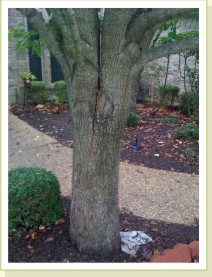
splitting trunk of Bradford pearThe average life expectancy of a Bradford pear is about 15 years. While the tree is capable of producing viable foliage for more than 15 years, this is typically how long the tree will last before it begins to fall apart. The numerous branches that originate at a central point cause structural defects that lead to the splitting apart of the tree (see pic). Pruning the tree to promote more upright growth and installing cables and braces to support weak joints can add to the life of the tree. In some cases, with regular maintenance and inspections, a bradford pear may last 20 or even 25 years.

For the most part, Bradford pears are highly resistant to disease and insects. There aren’t any know major insect problems and only two disease that commonly get into Bradford pears: fire blight and bacterial leaf scorch. Bradford pear fire blight and bacterial leaf scorchBoth diseases are treatable. Fire blight needs to be caught early to prevent significant damage. In fire blight the disease starts at twig ends and progresses back toward the main stem. The dead foliage will be a very dark brown and remain attached to the tree. In bacterial leaf scorch the leaves will turn a light color brown and fall from the tree similarly to normal leaf drop.

Bradford pears can be a good landscape plant if you are looking for a temporary (short lived) tree and there is adequate room for growth (need minimum of 10-15′in all directions). In small spaces the pear can be overbearing as they grow very quickly and block virtually all sun when full grown. They also produce large amounts of surface roots so they shouldn’t be planted where lawn/soil surface needs to be smooth such as high traffic areas or near concrete patios that may be broken by the tree roots.

Related posts:

  1. All About Arizona Ash Trees
  2. The Mexican Sycamore –Platanus mexicana
  3. Twitter Weekly Updates for 2010-10-11
  4. Is my tree sick?
  5. Ganoderma applanatum –Artist’s Conk

Comments
  • E. Rowell January 16, 2012 at 7:50 pm

    I have a BP that was planted in September of 2004 when my house was built. My neighbors on both sides also both have BPs, one was planted at the same time as mine and one that was planted a few weeks later. Their trees are leafy and beautiful and tall, just gorgeous they are taller than the rooftops! Mine, on the other hand, looks like the Charlie Brown version of a BP tree. It grows maybe an inch or so every year, but it is spindly with curled up eaves that will turn brown or yellow on the odd occasion and fall off only to grow more and start the process all over again–it also goes through this lose all the leaves and then rebloom thing every spring and every fall. I asked the local nursery if they had any idea as to what might be wrong and after they saw a pict of mine versus the neighbors they said it was probably something buried under my tree that caused the roots to form improperly. They suggested I dig it up, check underneath, clear out debris and try replanting it, or of course, I could get rid of it and buy a new one. It is maybe 12-15 feet tall and 10 feet wide and like I said, it looks just pathetic. Should I give up and put the poor thing out of its misery or try something new? I wondered if I over fertilized and put the tree stakes to close after I moved into the house causing burned roots and stunted growth. Help, please?

  • Pete Pyzdrowski September 16, 2011 at 11:33 am

    Gee, so I should be looking for a replacement for my thirtysome year old Bradford Pear. The heat and drought seems to have taken a toll on it out here in Odessa TX. It is losing leaves as if it were November. I am distressed to realize that my only tree in the back yard is failing. It shades over a third of the yare and is pleasnt to sit under and ponder….

  • Jholeen Cunningham September 14, 2011 at 12:36 pm

    Keith,
    Can you give me some alternatives for a Bradford Pear (similar in size, shape…). We need a mid-sized ornamental shade tree for a small front yard near a driveway. We are looking mainly for one that will shade the front door. Thanks!

  • Josh Slack August 25, 2011 at 6:20 pm

    Keith,
    I live in Kansas City and have a flowering pear tree that the bark is split and leaves curled up and have brown on them tree looks dead its about 6 years old. I am I able to save it. It look really good until we had a rain and hail storm then it started looking sick. Please help me save my tree.

  • Sandra Earle August 10, 2011 at 6:14 pm

    Keith,
    I live in Houston and the hot/humid climate this summer is hard on my Bradford Pear tree. The leaves curl up and some have a little brown on the interior of the leaf close to the vein. Please tell me what I am doing wrong? The tree is 1 1/2 years old and the leaves have always been a pretty green, but the tips curl up.

  • ODIE July 11, 2011 at 5:45 pm

    I have a bradford pear tree that I planted 15 years ago on the east side of the house and we had a very big storm come through an i had just trimmed the tree and the next few days after the storm the tree drops all its leaves now the strange thing is I have the second tree about 30 feet apart and nothing is wrong with this tree. What coul dof happen Im not going to cut it down until I find out the issues can you help

  • Vicki orr June 27, 2011 at 10:21 am

    We have 2 Bradford pear trees, approximately 15 years old that shade our backyard and small lap pool. In the last month they have been dropping pea sized “pods”everywhere and clogging pool equipment as we are out of town most of summer. What r these pods and how long does this last. My husband wants to take them out but I am resisting because it is only shade we have. Any suggestions. Thank you.

  • JJ Riehl June 26, 2011 at 11:40 am

    I have a bradford pear in my backyard and it seems to be healthy and doing fine! However, I noticed a couple of things that make me a little nervous. Two small limbs have lost a small piece of bark and every day there seem to be a few brown leaves on the ground that have fallen off. The tree is really full, no gaps or anything in the leaves. The tree had a beautiful spring bud and like I said looks really hearty and healthy but these two things concern me. I didn’t know if it was simply stress due to the horrible heat and drought that we are having in Central Texas? I appreciate any help you can give me.
    Thank you!

  • frank caccese June 22, 2011 at 4:38 pm

    W have a large bradford pear that the township planted years ago not sure how old it is, the roots are starting to come up on the lawn, it has already lost some heavy branches, and is starting to damage the street, We have complained about and flled out a tree removal form ,we are wating for an answer July 14th is our next meeting. Do you have any information I can bring to the meeting , I would appreciate any help you can give us .
    Thank You
    Frank Caccese

  • ethel gervin June 19, 2011 at 5:17 pm

    On two of my BP trees large branches have broken off the side. Should the the area where the branch broke off be treated with anything? Don’t think I can save the 3rd one that split right down the middle!

  • tawillard June 13, 2011 at 9:25 am

    My bradford pear trees have something that looks like a blossom on them currently (they bloomed in the spring, but this is different). The “blossom”is filled with a bright orange pollen. I’ve never noticed this before. We haven’t had much rain in the last month, and finally got a shower on Saturday. I looked outside and my yard was bright orange. Do you know what’s causing this orange pollen?

  • Janice Lewis June 1, 2011 at 10:49 am

    I have 2 bradford pear trees in my back yard one is healthly and the other one’s truck is cracking and the leave are turning brown and falling off. I did notice and have taken care of them is fire ant pile around the base of the tree could this be the problem?

    • Keith June 4, 2011 at 7:22 am

      Fire ants are probably not the source of your problem. If the leaves are turning brown and falling off there is definitely something more serious going on. It may be cottony root rot. If that is the case, your tree is not salvageable.

  • Jay Vogt May 4, 2011 at 6:56 am

    I would like some more info on the treatment of fire blight but I cant really decide which disease I have since the leaves are light in color and its very windy here so they fall off of the tree

  • Ramona Woodrum April 19, 2011 at 8:11 pm

    Our neighbors have a bradford pear that sits close to our property line. The tree is 20 yrs old and they have never pruned or taken car of the tree. Last yr. a storm broke a large branch and it landed in our yard. This past yr. I had a tree service come out and do some work for me. The man asked if I wanted him to trim the bradford pear. I told him it was not my tree. He told me that any branches hanging into my property line could be cut. The man cut the branches. A week ago we had high winds and another large branch broke. Our neighbor is saying we are to blame since I gave the man permission to trim the tree. We have offered to pay half of the cost of removing the damaged tree but the neighbor says we owe for it all. Could you direct us to someone that could help. Thank you, Ramona

  • Britni April 16, 2011 at 6:14 pm

    We had hurricane like weather today in maryland and both of our Bradford pear trees split in half. Is there anyway to save the trees maybe by tying the split branches back up to the rest of the trees.

    • Keith April 27, 2011 at 5:31 am

      I’m not the best guy to ask about trees in Maryland. In Austin, I’d tell you to go ahead and remove the trees.

  • Margaret March 29, 2011 at 6:52 pm

    Can you tell me what are the several rows of small holes around the trunk of the BradfarodPear trees that I have. What can we do and is it a dieases?
    I live in Huntsville AL and also would like to trim and thin out the trees, is it a good time now to do so?

    • Keith April 27, 2011 at 5:43 am

      I don’t really know much about the trees in Alabama. You should definitely seek council from a local arborist. You can find an arborist in your area at http://www.treesaregood.com.

    • Melissa October 5, 2011 at 5:58 pm

      The holes are probably from bores. They are an insects that live in the wood. They are hard to kill, but they probably won’t kill your tree.

    • Charlotte Stone January 15, 2012 at 8:32 pm

      I have a 15 yr. old bradford pear tree that is full of holes from top to bottom on the main trunk of the tree. What is this and can it be saved ?

  • Kim March 27, 2011 at 8:40 am

    I have a 7 year old Bradford Pear and Last fall it lost all it’s leaves about 1 month befoer all the others in the community. Now this year all the trees in the community are beautiful with full blooms. Our tree has about 20 blooms. We have a 2 story house and the tree is on the the north side. Could the tree not be getting enough sun? The trunk and branches look normal. HELP!!!

  • Mike Walker March 20, 2011 at 8:02 pm

    Keith: I have three large Bradford Pears in the back yard. each spring they flower well but very few leaves spring out. Do I have issues with water, with fertilizer (I use stakes) or do I have a blight? Any help you can offer would be great, thanks. Mike

  • Mark March 18, 2011 at 6:39 pm

    Hey Keith, we have a bradford in our backyard that our builder planted when we first got our house and have thought about removing it from hearing about how they tend to split in half and are short-lived and replacing it with a more viable tree like a Texas Red Oak or Cedar Elm. The tree is about a foot in diamter right now and is not very vigorous compared to the Red Oak, Bur, and Cedar Elm we have around our home. I’m not really sure if we should remove it while it is still small and avoiding the headache later on or letting live it’s lifecycle.

    • Keith March 19, 2011 at 7:27 am

      Personally, I would go ahead and remove it now and replace with a permanent tree. But, that’s just me. The idea is, the sooner you get the replacement in there, the sooner it will grow into a large tree.

  • Matt Johnson January 19, 2011 at 12:43 pm

    It’s kind of cool how low maintenance bradford pears seem. Great pics below.

  • Robert September 9, 2010 at 3:59 pm

    I have a better one for you, my Pear tree is blooming for the second time this year, on September 9th. It has half a dozen Pears on it and is now in the process of trying to create more. Must think it is spring, 55 degrees outside and a 20 mile per hour wind. It froze two days earlier this week. This is one confused Pear tree. Heyburn Idaho …Bob

    • Cathy September 26, 2010 at 6:08 pm

      I just noticed blooms on my Bradford too. It is Sept…almost August. It is normal?

    • Keith September 29, 2010 at 8:15 pm

      I wouldn’t call it “normal”, but it is common. Often stressed trees will shed their leaves from summer heat stress. As long as the stress level is minor, the trees will usually bounce back in fall when temperatures start to drop and the rains start back again. This is an indication that your tree is mildly stressed. I would recommend checking out this article on fertilizing.

  • Lisa Kearney July 30, 2010 at 10:26 am

    Hi Keith –I have a bradford pear that is about 3 years old and the bark is separating from the trunk. I had read somewhere it could be due to a boring beetle. Is that your opinion and what would you recommend? The tress is blooming and has fruit on it, but the bark is split from the base all the way up (about 4′to the first major branch). Thanks

    • Keith August 13, 2010 at 6:18 am

      That could be many things. Can you upload some pictures to look at?

  • Robin Vigliano July 11, 2010 at 3:58 pm

    Hi Keith,

    Here are some pictures of my tree. Some of the branches have new growth on them, but the leaves will be spotted before long. The apples/pears have spots also. The tree was here when we moved here a year ago, so I don’t have any idea of the tree’s age. We live in Southwest Austin. Thanks so much,

    Robin

    • Keith July 11, 2010 at 8:44 pm

      It looks like an old pear tree that has been declining for a while. Obviously, it is doing worse now than it has been, but I see symptoms that it has been stressed for years. I wouldn’t recommend expending the energy to diagnose the two or three disorders it has;the tree is too old and appears to be beyond a threshold of responding to treatment. If you do anything, start with a fertilizer regimen. Check out my do it yourself fertilizer article to get going in the right direction

  • patricia amdur May 31, 2010 at 6:20 am

    Keith, we purchased a small Bradford Pear tree this year and it is developing some kind of infection/mold on the branches. The disease leaves a bright orange dotted powder and is a kind of canker —above the orange canker, the leaves become distorted.

    I cut off the offending branches (which has grown considerably since I first noticed it). Should I send a photo? I live in North Carolina..had no idea of the problems of the tree when I bought it for $15 at a discount store!

    Thanks so much!

    • Keith May 31, 2010 at 11:22 am

      You are in a vastly different region that Austin;your neck of the woods gets a much different set of insects and diseases than what we get. There is no disease I’m in the Austin area that matches up with your description. You’ll definitely need to find a local arborist if you want some nitty-gritty details.

      I can tell you that you are on the right track. For stem canker type diseases step one is always to remove the diseased limbs. If you can get a positive diagnosis on the type of canker, you might find a product labeled to treat it. However, usually, in my experiences, a proper fertilization and watering regimen will usually get a tree’s health back to a point where it can help itself (provided the site conditions are good –drainage, soil type, etc.)

  • Renee April 23, 2010 at 10:52 am

    I have a 17 year old bradford pear in my front yard. There used to be two of them about 8 feet apart, but finally cut down the other last year. This one is very overgrown and only been trimmed from the bottom by us for the last 7 years (now it seems to be very thick and top heavy). A landscaper came to our door and offered to prune it for $250. Which made me think, is it worth it to prune it, or more worth it to spend the money to cut it down? And, don’t worry, if we do spend the money to prune it, it won’t be by a non-tree expert that solicited at our front door.

  • Sheila April 20, 2010 at 12:59 pm

    One of my Bradford Pear trees bloomed nicely but then the blooms just died and no green leaves came on. The other three bloomed nicely too. But now one of them is starting to loose it’s green leaves now. So far the other two are fine. What could be the problem?

  • Brian April 11, 2010 at 2:15 pm

    I have a BP tree that I believe to have BLS. The tree is 9 years old. It has been getting progressively worse. I think this is the third season of the disease. Now the bark is starting to release from the trunk. The tree does not bloom as fast as the other trees. This tree looks naked next to the others. While the rest of the trees are in full bloom this one is not even half. however it does have new growth. Can the tree be saved.

    • Keith April 11, 2010 at 6:21 pm

      Your comment inspired me to add a feature to allow picture uploads. If you can upload a picture, it would help me understand your problem better. Anyway, here is some feedback…

      Bark separating from the trunk is not a symptom of BLS. It might be that the tree has declined to the point that part of the vascular system is failing, in turn bark falling away from where the veins underneath have die. But, I doubt that is the case. Regardless of the cause, if your Bradford pear is 9 years old with these major problems, expending lots of energy and $$ will not pay off for you. Bradford pears have a short life span and yours is getting old for its kind.

  • Katie April 9, 2010 at 3:13 pm

    My Bradford pear seems to be having major trouble. It’s yellowing and the leaf clusters on the end of some branches are drying up and dying, while some leaves are perfectly normal. Is that Fire Blight? There are pictures here: http://www.runawayoctober.com/2010/04/whats-wrong-with-my-tree/

    ANY help is appreciated!
    Thanks!

    • Keith April 9, 2010 at 6:02 pm

      It does look like fire blight the way the twigs are turning dark brown. I don’t know what the weather is like there, but a cold snap while the tree was budding out could cause this symptom, too. Bradford pears should have a more dense branching pattern and thicker foliage that what your little pear has. This makes me think it may have been stressed before it ever got to your house. Some pictures of where the trunk goes into the ground might help me. Regional differences for trees are huge. A local arborist should be able to help you better than me.

  • Dental Lake Worth January 28, 2010 at 1:46 am

    Despite their standing as one of the most popular landscape trees in the Southeast, Bradford pears aren’t what they’re cracked up to be.

    For despite all the beauty they lend to thousands of landscapes throughout the region, the trees are plagued with one fatal flaw: due to their combination of vigorous growth, weak wood and poor branch structure, they often begin falling apart after only 20 years.

    Experts say homeowners and others would be far better off buying other trees – trees that lend beauty to the landscape and last longer.

  • MJ December 31, 2009 at 5:21 pm

    My neighbor planted a few of these and they have such beautiful fall colors that I would love to have some in my yard. But now that I’m reading that they are “genetically prone to self-destruction”and have abundant surface roots, I’m inclined to stay away from them. Can you suggest other quick growing trees for a small Northwest Austin yard? I’m looking for a tree that flowers in the spring and that offers beautiful rich fall colors. I hate surface roots. I have a crepe myrtle that doesn’t ever seem to do too well in our yard. I also have one Arizona Ash left that is doing fairly well considering its age. Something smaller would be fine.

  • Portland Tree November 18, 2009 at 8:18 pm

    Your “structural integrity issues”is even more forgiving that Dirr’s comment in one book which was “genetically prone to self-destruction”.

    Those trees here in the Portland landscape, also break apart pretty good. And even new varieties have not overcome the brittleness which occassional ice here will snap.

    MDV / Oregon

    • Keith December 17, 2009 at 1:09 pm

      I wouldn’t disagree with the quote:
      “genetically prone to self-destruction”

  • Susan Kies July 31, 2009 at 1:03 pm

    Hi, I believe my BP, which is 20 years old, but still structurally sound has developed BLS…it’s dropping its leaves in July, they look brown, as if it’s Fall. This has been going on for several seasons, but the tree comes back beautifully in the Spring! Should I treat it now or wait until the Spring? Thanks!

    • Keith August 1, 2009 at 6:55 am

      Sooner the better on the treatment. It is not uncommon to have to spray more than once on 2-3 week intervals if you go the strobomyacin route. But, definately follow the manufacturers label for whatever product you use.

      • Keith December 17, 2009 at 1:11 pm

        Even if you treat now, which is a good idea;you should do it again in the spring to be on the safe side.

  • Susanne Fulgencio July 29, 2009 at 3:56 pm

    I have a 4 year old Bradford Pear and every year I detect around the middle of July that the leaves turn brown and fall from tree .just like they would if it was October.Not all at once but slowly over time. I believe it is Bacterial Leaf Scorch.How can I treat this problem Thank you Susanne I live in North Texas.

    • Keith July 29, 2009 at 5:36 pm

      If you have normal leaf drop where the color change is just like fall, it is more likely that your tree just has heat stress. Usually with BLS you will see a weird mottled color pattern when the leaf dies. Considering the tree is young it may be having trouble getting it’s roots established. So when the Texas heat kicks in in July there simply aren’t enough roots to support the canopy and the tree is shedding leaves. This is pretty common on Texas trees. Try watering it a little extra and give it a root fertilization in early October and see what happens next year. If it is BLS you can treat with strobomyacin (if available) or Rainbow sells a product that you can use: http://www.rainbowscivance.com/bacastat/index.asp

  • Gary Gill July 11, 2009 at 12:28 pm

    I have a BP tree that is in the middle of two more. It looks to have fire blight. It is starting to get on the leaves on one next to it. Do I need to dig it up or can it be treated? Please let me know asap. I am afraid I let it go like this too long.

    • Keith July 13, 2009 at 10:23 am

      Fire blight is treatable. A copper-hydroxide fungicide, such as Kocide, will get the job done. You will have to spray the trees two or three times at 2-3 week intervals. Bradford Pears rarely die back so much in one season that they become untreatable.

      • Harry Luna August 27, 2010 at 1:45 pm

        I have been frantically looking on how to save my trees. I believe that my Bradfords have the Fire Blight. I noticed the tree closest to my house loosing leaves on a Sunday morning and by Thursday almost all the leaves were gone and the branches look like they have been burned, The tree next to it now has leaves changing colors and is looking pale in the colors. I noticed that you recommended “Kocide”as a treatment. Where can I find this product in Austin or Houston? I’m afraid I’m going to loose my trees if I don’t do something quick. Also, once the branches turn Black like my first tree, is it possible that it could come back next year?

        Thanks

        Harry